
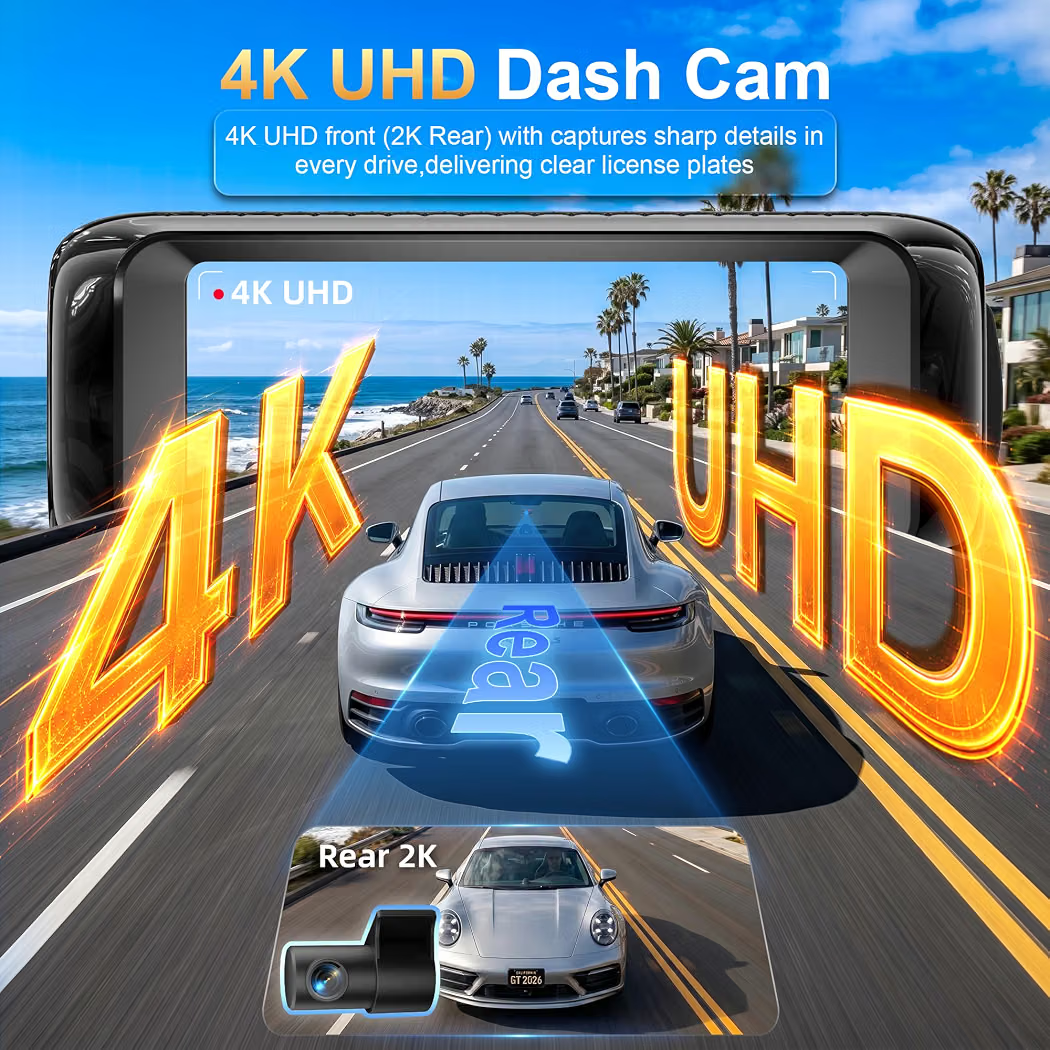
Dash Camera Front Rear
Automotive
Key Features
Dual-channel recording captures both the road ahead and behind the vehicle
High-resolution video, with many models offering 4K front and 1080p–2K rear recording
Night vision/HDR for clearer footage in low-light conditions
Loop recording automatically overwrites older footage when storage is full
G-sensor detects impacts and locks important recordings
Parking mode can monitor the vehicle while parked, depending on the model and power setup
Built-in GPS and Wi-Fi are available on many modern models
Pros
Provides evidence from both front and rear angles
Helps document accidents, rear-end collisions, and traffic incidents
Useful for identifying vehicles, license plates, and driving situations
Adds extra security when the car is parked
Convenient footage transfer on models with Wi-Fi
Best For
Daily commuters
Long-distance and highway drivers
Rideshare and professional drivers
New drivers
Vehicle owners who want additional protection against disputed accidents or parking incidents
Material
Usually constructed with a durable ABS/polycarbonate housing, glass or high-quality optical lenses, and electronic components designed for continuous recording. Rear cameras are generally compact and designed for windshield or rear-window mounting.
Sizes
Dash cameras are generally compact, with the main front unit commonly measuring around 2–4 inches depending on whether it includes a display. Rear cameras are typically smaller and designed to mount discreetly on the rear windshield. Exact dimensions vary by model.
Care Instructions
Keep both camera lenses clean and free from fingerprints or dust.
Clean the lens gently with a microfiber cloth.
Keep cables securely routed and away from areas where they may interfere with driving.
Remove the SD card carefully and format it according to the manufacturer’s recommendations.
Avoid exposing the camera to excessive moisture or unnecessary heat.
Check the mounting position periodically to ensure the camera has not shifted.
Why We Recommend It
A front-and-rear dash camera provides more complete coverage than a front-only system, recording what happens both ahead of and behind your vehicle. This can be particularly valuable during rear-end collisions, tailgating incidents, parking-lot damage, and other situations where a single camera may not capture the full picture.